
LIFE IN YUGOSLAVIA
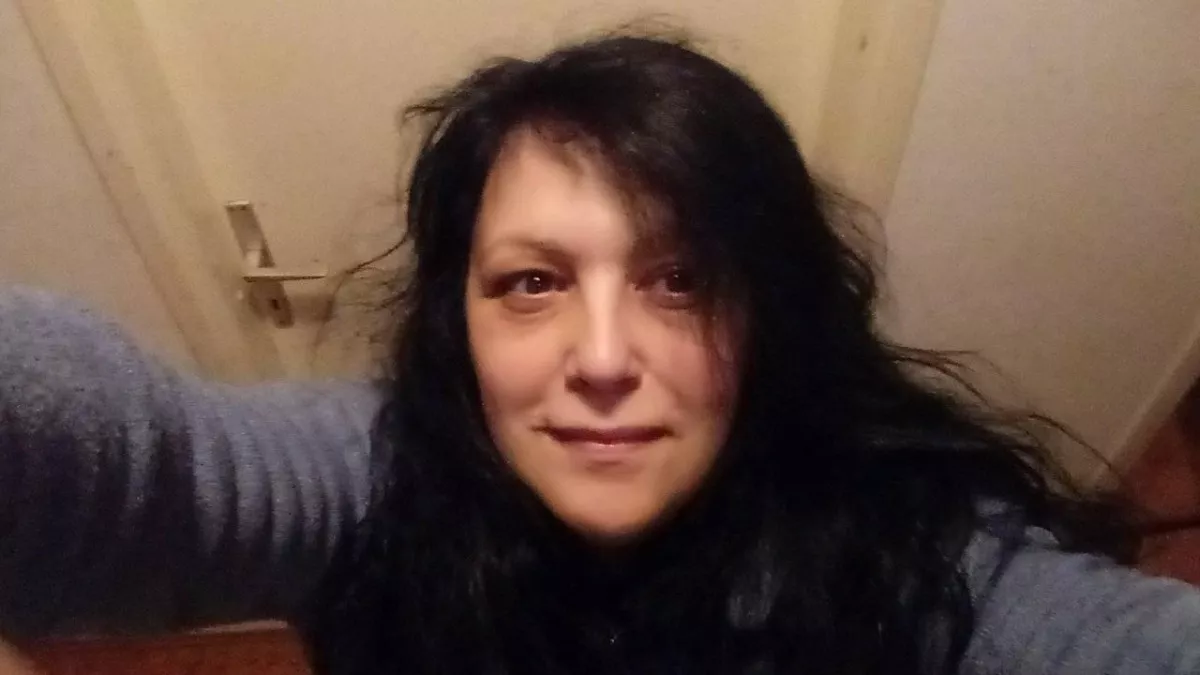
Yugoslavia was the country I was born into. Until Tito’s death I sincerely thought that it was the best country in the world. Everybody knew our president, Tito. Whenever I went outside the country I was welcomed.
Of course we had communism, what I was not aware of the time when Tito was alive. Communism meant that there is just one party and everything else was forbidden. I didn’t have any idea about atrocities that communists committed because there was no information about anything at all. :cry: It was just propaganda and that was all over, from school to TV, newspapers and so on.
Tito himself was very aware that Yugoslavia was a country which was composed of more nations and that nationalism will kill it. Of course this happened at the end. If communist had be clever they would have allow nationalism to fade in the country, but then we would not have communism any more.
So… our past was as it was. What was the worst thing about communism? That it taught one thing and it practiced something else. It was such a heavy mind control, it was unbelievable.
People think – after more than 30 years after Tito’s death – that what we had was a good system. Of course it had its good things, everybody could get work, flats and food. But we were all same, poor, nothing that was other then average was not allowed.
Specially all that was foreign was proclaimed as bad and dangerous, and still is. After more than 20 years after the end of communism and end of Yugoslavia, people’s minds haven’t change. Especially they didn’t change if they didn’t travel around.
So… first I have to tell you something about eighties. Tito died in 1980. I was on the Faculty for sociology, political science and journalism, where it was the same ideology, as Tito was still alive. Everything was the same, just the big guy was not there anymore. Slowly we start to ask ourselves, why we are allowed to have just one party, why we knew in advance who will win the “elections” and why there are so many things which are unspoken or forbidden to tell.
People start to talk. First were students of course, then they start to talk about it on youth radio, then in certain newspapers… then people start to demonstrate… Politicians were afraid to lose their power. Specially under pressure was army, the army where my father worked his whole life.
My father went into the army very young… in his teens. He came from the region of Hercegovina, from village Korita, which is on the border what is now Croatia and Montenegro. The place is 100 km away from Dubrovnik and Adriatic sea. It’s very poor and still very primitive. It’s like on the back of God. I remember my father’s talking about it. He said, that they were so poor, that they had to eat grass when was the time of war. My father was born in 1935 and was sent as a teenager to Vojvodina region to his relatives – because they literarily had nothing to eat at home. He had seven siblings, just two of them stayed at home, all others went away from the place on studies and on work in Belgrade.
My father told me, that for him was a shock when he came in Vojvodina region and saw so much food there. He had two choices to study, which was for free in this time – to be an army officer or to work as a railroad worker. Yugoslavia had just started to build it after the war and my father choose the army. He was very ambitious. He started with army’s secondary school and went onto the military academy. People from the army and from the railroad where sent all over the country.
In the sixties he was sent to Slovenia, where he met my mother. So, I came. :) )))
We lived in a small slovenian town, where there were around 2000 inhabitants and half of them were army people, their families or soldiers. They were two big army bases in this little town. I was raised from the beginning in two languages, Serbian – which was my fathers language and actually also the language of the Army. Slovenian, which is the language of my mother. My father talked to me in Serbian, I answered to him in Slovenian. Actually I found out that these are two different languages in elementary school.
We lived together in the Army’s buildings for its people, we played together as kids, we gave school books away to other children, we knew “everything” what is going on. We were going every day to other flats to visit their families (actually not we as kids, but grown people).
We were one big family living in a ghetto. It was always changing, because officers where often transferred to other parts of the country over night. But we never lost contact! I actually never understood why they did that. Maybe, they wanted to prevent people from settling down somewhere…
We were driving every summer thousands of kilometers south to see my grandma and my grandpa. There, we always met of all my relatives who lived in South.
***
II.
So, my mother is Slovenian, my father was Serbian and we lived in Yugoslavia which was a communist state, actually lead by Serbians, because Serbians were the most numerous nation. Apart from them, they were Croatians and Bosnians, which are actually compared to three groups since in Bosnia the people divide themselves on religion basis – we have Bosnian catholics, which are Croats, Bosnians orthodox – which are Serbs and Bosnian muslims. Then we had Montenegrians, which are actually Serbs, but they have their own political state. Then we had Serbia, which has in it Vojvodina and Kosovo regions and at last Macedonia.
The army, where my father worked, was very authoritarian and very … how to say… russian and turkish at the same time. :roll: I remember lots of words, which were actually french origin… like: garnizon, kampanjola… and there were lots of words which were turkish origin, since Turkey occupied Serbia for 500 years and that’s why they have lots of turkish words. These words were at my home “normal” and I discover later on – specially when I was in Turkey, that these are turkish words… like… komšija (komsi = neighbor), merdevine (ladder), hoklica (chair), rakija (raki – liquor), čuprija (cupri=bridge) and so on.
So… the Army in Yugoslavia was a mighty force which in itself had all parts of nationality but Serbian were kind of first, although there was never written about that and on paper we were of course all equal. On paper…
In the eighties when I was studying political sciences, there was lots of uprisings all over Yugoslavia and it was clear that communists could not handle the situation which appeared after the person who held everything together – Tito – died… They could handle it with force but at the end this is always a bad solution which always comes as a boomerang.
So… Milošević came out on a political stage around the year 1987. This was the beginning of an end of Yugoslavia. This guy was Serbian and he was clearly against Albanians on Kosovo. He was very nationalistically. He started to claim that Serbians don’t have enough rights, that they are underprivileged and so on.
I remember discussing Milošević with my father. All Serbians in the Army supported him. I actually understood why, but his policy was clearly imperial and pointed against one nation. Which is Serbian “pain” through the history anyway…
Več od dajana.babic
Komentarji (0)
Še ni komentarjev.